
 by
Last Updated: November 13, 2026
Quick Summary
Buying new build villas in Benahavís is a legal and financial process with several stages, and most of the work happens before you sign anything. Budget for IVA at 10% of the price, stamp duty and notary, registry and legal fees, not just the asking price. Verify the developer, plot registration and licences first, and confirm completion timing in writing.
- Homes in Benahavís sold for an average of €4,452 per square metre in the twelve months to June 2026.
- New builds attract 10% IVA on the purchase price, while resale purchases pay transfer tax instead.
- Stamp duty (AJD) is around 1.2% of the purchase price at the regional rate.
- Mortgage funding is often lower for non-residents, so get pre-approval before paying a reservation deposit.
- Confirm in writing when the licence of first occupation is expected, since completion date and occupation date can differ.
Table of Contents
- What Buying a New Build Villa in Benahavís Involves
- New Build vs Resale: Pricing and Trade-offs
- Types of Villas and Frontline Golf Options
- New-Build Property Taxes and Fees in Spain
- Developer Checks Before Buying a New-Build Villa
- New-Build Property Legal Documents and Licences
- Off-Plan or Completed: Which Route Suits You
- How Long It Takes to Buy a New Build in Spain
- Next Step: Shortlisting Villas and Requesting Floor Plans
- Frequently Asked Questions
What Buying a New Build Villa in Benahavís Involves
Buying a new build villa in Benahavís is a legal and financial process with several stages, and most of the work for any new build villas purchase happens before you sign anything. New Developments Marbella helps buyers compare hand-picked villas and review floor plans before they commit. Homes in the area sold for an average of €4,452 per square metre in the twelve months to June 2026, according to Ideal Home’s Benahavís property guide, which draws on notary data. That average covers all sales in the area, so a new villa will often sit above it, depending on design, plot and specification.

The process generally runs from reservation and contract to a notary signing, tax payment and final registration. Each stage carries its own costs and documents, so buyers who plan the sequence early avoid most of the delays that catch people out.
New Build vs Resale: Pricing and Trade-offs
A new build is not automatically the better purchase. Resale properties can offer an established plot, mature gardens and a known track record, while new builds offer modern specification and, usually, a longer warranty period. Terra Meridiana’s guide to new versus resale property on the Costa del Sol sets out the pros and cons of both routes, and the choice should follow your priorities rather than the marketing.
On price, the average asking price for villas is €5,413 per square metre, according to Nueva Living’s 2026 guide to Benahavís new developments. Modern villas typically range from €6,000 to €9,000 per square metre, with ultra-prime estates above €10,000, as JJ Marbella’s 2025 buying guide reports. Asking prices are not transaction prices, so compare like with like: same plot size, same finish and same view.
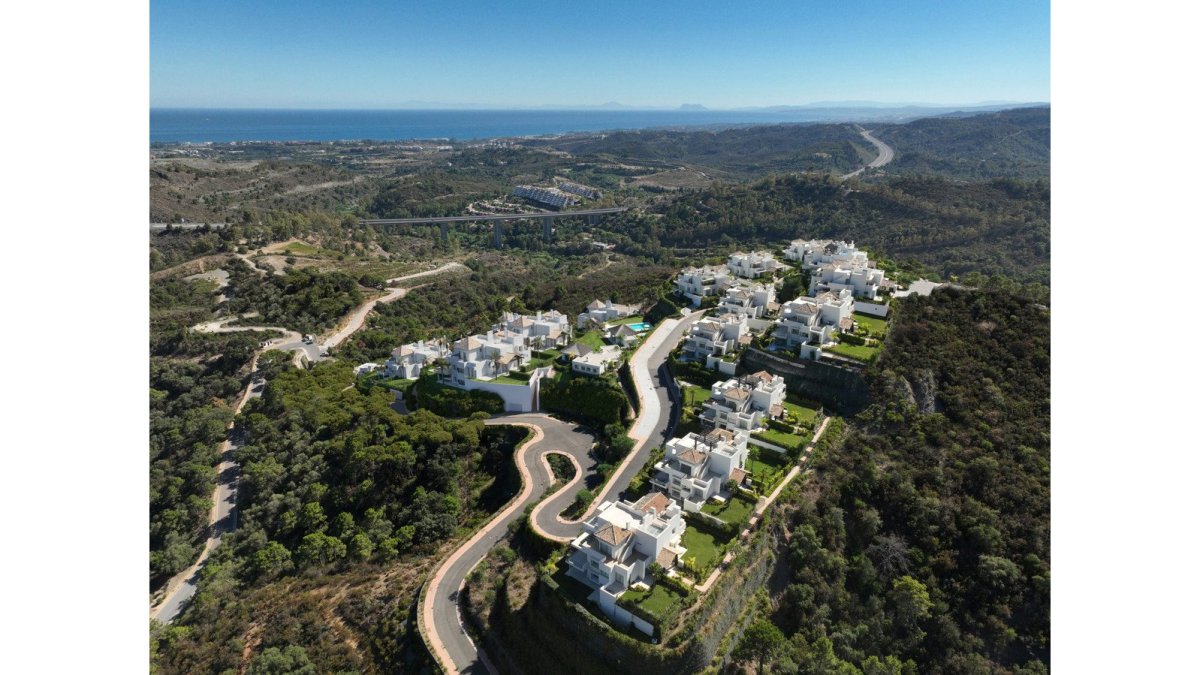
For a buyer comparing a new villa with a resale home, the practical question is what each option adds beyond the price per square metre. Check it against the specification, the plot, the community costs and the timing of completion. Villa Harmony shows the types of villas and frontline golf options that buyers typically compare at this stage.
Types of Villas and Frontline Golf Options
Benahavís offers several villa formats: detached villas on hillside plots, gated estates with shared services, and frontline properties overlooking the golf courses. Frontline positions usually command a premium, but they also bring considerations such as noise, boundary access and golf club membership rules, so ask about these before you reserve.
Match the format to how you will use the home. A full-time resident needs different things from a second-home owner who visits a few months a year. For a closer look at the village and its estates, see Living in Benahavís (2026): the village, the golf and the gated estates.
New-Build Property Taxes and Fees in Spain
Buying a new build carries a different tax structure from resale, and the difference is large enough to change your budget. On a new-build purchase the main taxes are 10% VAT (IVA) on the purchase price, plus stamp duty (AJD) set by the regional government. Resale purchases instead attract transfer tax (ITP) and are not subject to IVA, which is why the two routes are not directly comparable on headline price alone. Confirm the current rates with a qualified Spanish tax adviser.
Budget the taxes as part of the purchase price, not as an afterthought, because they are paid at completion and cannot be rolled into a mortgage in the way the property price can.
Beyond the two headline taxes, plan for the following. Confirm figures with your lawyer and notary, because notary and registry tariffs scale with the property value and the number of pages in the deed.
| Cost | Typical basis | Who pays |
|---|---|---|
| IVA (VAT) | 10% of purchase price | Buyer |
| AJD (stamp duty) | ~1.2% of purchase price (regional rate) | Buyer |
| Notary fees | Scaled tariff on deed value | Buyer |
| Land registry fees | Scaled tariff on registered value | Buyer |
| Legal representation | Agreed fee, often 1%-1.5% of price | Buyer |
| Bank guarantee / reservation | Set by developer, credited to price | Buyer |
Once you own the villa, the recurring costs start: community fees if the property sits in a gated estate, IBI (annual property tax) set by the municipality, rubbish collection, insurance, and maintenance of pool, garden and security. For a hillside villa with a pool, these running costs are a real annual line item, not a rounding error, ask the developer or the community administrator for the current figures before you reserve.
Non-resident financing. The practical question for an overseas buyer is how much of the price a Spanish lender will fund. Non-resident buyers are often offered lower loan-to-value ratios than residents, and lenders will typically want to see the NIE and proof of income. Because IVA and AJD are paid from your own funds, a mortgage still leaves a substantial cash requirement once taxes and fees are added. Get a mortgage pre-approval in principle before you pay a reservation deposit, so you know your true budget.
Watch out: a developer’s quoted price is not the total cash you need at the notary, add IVA, AJD, notary, registry and legal fees before you decide what you can afford.
Developer Checks Before Buying a New-Build Villa
Before paying a reservation deposit, verify the developer. Ask for the developer’s company details, confirm the plot is registered, and check the planning permissions and licences for the development. Request the building specification in writing, so you can hold the developer to it.
Compare the floor plans with the specification sheet and check the completion schedule and the penalties for delay. You can request detailed floor plans and specifications from New Developments Marbella before you speak to the developer, so you can compare them properly first. A developer who will not put commitments in writing is a warning sign.
New-Build Property Legal Documents and Licences
Most international buyers need a Spanish lawyer and a Spanish tax number (NIE) before completing. The core documents typically include the reservation contract, the purchase contract, the title deed, the licence of first occupation and the energy performance certificate. Have a lawyer check that the developer holds the planning permissions and that the licence of first occupation will be issued on completion.

The notary signing confirms the transfer, and the property is then registered at the land registry. Keep copies of every signed document, because you will need them for banking, insurance and any future sale. For the full sequence, read our Legal Process for New Builds in Spain: 7 Steps Explained article, which covers the same stages in more detail.
Off-Plan or Completed: Which Route Suits You
Off-plan purchases let you secure a villa at an earlier price and often choose finishes, but they carry completion risk and a longer wait before you can occupy the home. Completed new builds let you inspect the finished property and move in sooner, usually at a higher price.
Choose the route that fits your timeline and tolerance for risk. If you need to live in the home by a set date, a completed property or a near-completion project is usually the safer choice. If you have time and want to influence the specification, off-plan can work well, provided the developer’s guarantees and bank guarantee protections are in place.
How Long It Takes to Buy a New Build in Spain
The timeline depends on whether you buy off-plan or completed, and on how quickly the legal checks and financing clear. The table below sets out a realistic sequence for a completed new build; off-plan adds the construction period on top.
| Stage | Typical duration | What happens |
|---|---|---|
| Reservation | 1-2 weeks | Deposit paid, property withdrawn from market |
| Legal and developer checks | 2-4 weeks | Lawyer reviews title, licences, planning, developer solvency |
| Private purchase contract | 2-4 weeks | Terms, payment schedule and completion date fixed |
| Mortgage approval (if needed) | 4-8 weeks | Bank valuation, non-resident documentation |
| Notary completion | 1 day, scheduled 1-2 weeks ahead | Deed signed, taxes paid, keys handed over |
| Land registry registration | 4-12 weeks after completion | Title recorded in your name |
| First occupation licence and utilities | Weeks to months | Licence issued, utility contracts transferred |
The whole process depends on the property and on how quickly legal checks and financing clear. Non-resident financing and the bank valuation add time, and off-plan purchases add the construction period on top of the legal stages. Ask your lawyer for an estimate for your specific purchase.
The steps buyers underestimate. The licence of first occupation is issued by the municipality once the build is signed off, and it matters for connecting utilities. Ask the developer in writing when the licence is expected and what happens if it is delayed. Registration at the land registry also takes time after the notary deed, so your title is not recorded on day one.
Post-completion reality. If you are buying remotely, the period after the keys are handed over involves setting up utilities, arranging insurance, and arranging security and garden or pool maintenance. If you plan to rent, check the local licensing requirements with the municipality before you do. None of this is part of the purchase price, but it is part of the timeline to a usable home. Line up a local property manager before completion rather than after, and confirm what the community fees already cover.
Build in a buffer. Currency transfers, mortgage approval, and the gap between signing and handover often take longer than buyers expect. If you have a fixed date to occupy the villa, a completed or near-completion property is generally the safer route.
Watch out: a completion date in the contract may not be the same as the date you can legally occupy and connect utilities, confirm the first occupation licence timing in writing before you sign.
Next Step: Shortlisting Villas and Requesting Floor Plans
Start by setting a budget that includes taxes and fees, not just the asking price. Then shortlist villas by format, location and specification, and request floor plans and written specifications for each one. Compare them side by side, and ask the developer to confirm completion dates and warranties in writing.
If you are ready to narrow the field, browse the Benahavís new development listings to build your shortlist. New Developments Marbella can help you compare floor plans and specifications, so you can make a considered decision before you speak to any developer.
Frequently Asked Questions
What should I check before buying a new-build villa in Benahavís?
Check the developer’s track record, the licence status of the project, the builder’s guarantees and the exact specification in the contract. Confirm the plot and the construction permit with the land registry and town hall, and request detailed floor plans and a full list of included finishes. Compare the price per square metre with recent sales in the area. Having an independent Spanish lawyer review the reservation contract before any deposit is paid is strongly advisable. Pricing depends on the specific unit, so request a written quote from New Developments Marbella on the website.
How long does it take to buy a new-build villa in Spain?
Timelines vary with the stage of the project. A completed new build can often move from reservation to deed signing in a matter of weeks, once legal checks, financing and notary arrangements are in place. Off-plan purchases run much longer because the property is delivered only when construction finishes, which can take well over a year. Non-residents should allow extra time for obtaining a Spanish tax identification number (NIE) and opening a bank account. Your lawyer can give a more accurate estimate for your specific purchase.
What taxes and fees apply when buying a new-build villa in Spain?
A new-build purchase is generally subject to 10% IVA (VAT) and stamp duty (AJD) set by the regional government. Resale properties are usually subject to transfer tax (ITP) instead, so the cost comparison differs. Notary and land registry fees are additional. The applicable rate and treatment depend on the specific purchase, so confirm them with a qualified Spanish tax adviser before committing.
What legal documents should I request from a developer?
Ask for the building licence, the land registry extract showing the developer owns the plot, the bank guarantee covering your deposit and the completion and insurance documents required by Spanish law. Request the energy efficiency certificate and the draft sale contract in advance. Having a lawyer check each document against the registry is the most reliable way to verify them.
What is the difference between buying off-plan and buying a completed new-build villa?
An off-plan purchase means you buy before construction is finished, usually in stages with payments tied to progress, and you accept the delivery risk until handover. A completed new build lets you inspect the villa before paying the balance, which reduces uncertainty but often comes at a higher price. Both routes should be backed by bank guarantees protecting your deposits.

Join The Discussion